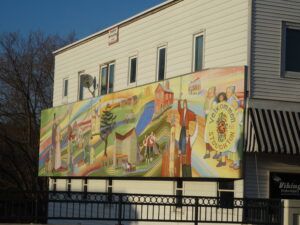


Stoughton, Wisconsin didn’t become synonymous with Norwegian culture by accident—it was built that way, piece by piece, by immigrants who arrived with very little and left a lasting imprint on the town’s identity.
Early Norwegian Immigration to Wisconsin
In the mid-1800s, waves of Norwegian immigrants began arriving in the American Midwest. Land was cheap, farmland was abundant, and Wisconsin’s climate wasn’t wildly different from what many Norwegians had left behind.
Dane County—where Stoughton sits—became a natural destination. Fertile soil and proximity to growing rail networks made it ideal for farming communities trying to establish roots quickly.
Why Stoughton?
Stoughton’s location along the Yahara River and its access to early rail lines made it more than just farmland—it became a small but important hub. Norwegian settlers weren’t just farming; they were building a functioning town.
Churches were among the first institutions established, serving both religious and social roles. These became anchors for preserving language, customs, and community structure.
Building a Norwegian-American Community
By the late 19th century, Stoughton had developed into one of the most distinctly Norwegian communities in the region. Families maintained traditions from back home—food, holidays, craftsmanship—while adapting to American life.
Local businesses reflected that heritage. Blacksmiths, carpenters, and merchants often passed trades through generations, reinforcing a tight-knit cultural identity.
Language persisted longer than in many immigrant communities. Norwegian was commonly spoken in homes, churches, and even some local gatherings well into the early 20th century.
Cultural Preservation Over Time
What makes Stoughton notable isn’t just that Norwegians settled there—it’s that the culture stuck.
While many immigrant communities in the U.S. gradually lost their linguistic and cultural markers, Stoughton leaned into preservation. Traditions weren’t just remembered; they were institutionalized through festivals, education, and community organizations.
Today, that legacy is most visible during Syttende Mai, the town’s annual celebration of Norway’s Constitution Day. What began as a cultural observance has grown into one of the largest Norwegian heritage festivals in the United States.
Why It Still Matters
The story of Norwegian settlers in Wisconsin is often told broadly—but Stoughton gives it a specific, lived-in context.
This isn’t just a town with Scandinavian roots. It’s a place where immigration history is still visible in daily life—from architecture to food to community events.
For anyone interested in Norwegian settlers in Wisconsin, Stoughton stands as one of the clearest examples of how immigrant identity can shape—and sustain—a town for generations.